Publication 7 October 2026
Quantum and European Sovereignty with Olivier Ezratty
Could you explain the different quantum technologies that exist today? Don’t we tend to reduce everything to the quantum computer?
We do indeed tend to reduce everything to the quantum computer, when it is only one application among others. It all depends on what we are talking about: quantum physics is a scientific discipline; quantum technologies are concrete applications of it. There are five main families, four of which remain much less well known than the quantum computer. This polysemous vocabulary creates a certain amount of confusion among the general public.
Quantum sensors are the first of these lesser-known families. They harness quantum properties to measure common physical quantities (magnetism, temperature, pressure, electromagnetic fields, gravity) with far greater precision than conventional sensors. By combining several sensors, it is even possible to measure several physical properties simultaneously for even greater precision. These systems can, for example, detect variations underground to locate oil, water or cavities. Some Chinese players even claim to have designed functional quantum radars. The subject is strategic, particularly because of its dual-use nature and its applications in the defence sector.
Quantum cryptography is the second family. Contrary to popular belief, it does not rely on software running on a quantum computer, but on telecommunications, that is, on specific physical equipment placed at both ends of a standard optical fibre, which sends light with particular quantum properties. This makes it possible to generate symmetric encryption keys that are random yet identical at both ends. In theory, any interception of this key along the fibre would be technically detectable. Once the key has been secured, the encrypted data can then travel in an entirely conventional way, including via satellite or on a USB stick.
This quantum cryptography must be distinguished from post-quantum cryptography (PQC), which has nothing quantum about it: it relies on conventional mathematical protocols, which can run on today’s computers and phones, designed to withstand a future quantum computer. On the one hand, then, we have non-computing quantum technologies; on the other, conventional technologies designed to withstand quantum computing.
The third family consists of quantum networks, a variant of telecommunications. Developed notably under the European EuroQCI project, they aim to connect quantum computers or quantum sensors to one another quantumly, via optical fibre or satellite. Connecting two conventional computers doubles their power. Quantumly connecting two quantum computers multiplies this power exponentially, depending on the number of qubits. In theory, connecting two 50-qubit machines is therefore equivalent to creating a virtual system far more powerful than the simple sum of the two.
Finally, quantum matter is the fourth family: this is fundamental research into new materials that exploit quantum properties at the scale of electrons and atoms, sometimes at very low temperatures. Its most common use case consists of designing batteries that operate at room temperature but are far more efficient than today’s.
You often speak of the second quantum revolution. What characterises it scientifically, and what is the real purpose of the quantum computer?
Quantum physics, which emerged at the beginning of the 20th century, describes the behaviour of matter at the nanoscale: the way atoms, electrons and photons interact with one another. In 2003, in the preface to a physics book, Alain Aspect theorised what he calls the “second quantum revolution”. His starting point is that the digital objects we use every day (transistors, LCD screens) are already quantum objects, but they belong to the quantum physics of the 20th century, which collectively manipulates billions of photons and electrons at once. The second quantum revolution, by contrast, exploits the principles of superposition and amplification, but above all an unprecedented capability: controlling quantum objects one by one. The French start-up Pasqal can thus control individual atoms using lasers. Quandela can generate and control individual photons, those elementary grains of light with very low energy.
It is essential to define what the quantum computer can actually do, so as not to see it as a global revolution that would replace AI, large language models (LLMs), e-mails, databases or enterprise resource planning (ERP) software. Its sole purpose is to solve certain classes of complex problems that we do not know how to handle conventionally, either to solve them faster or to do better by improving the quality and precision of the results. For example, in supervised learning in AI, quantum algorithms would make it possible to use far less training data, which would solve the problem of current AI’s gargantuan consumption of data.
Beyond fundamental research, what application markets are emerging for quantum computing?
In terms of commercial application markets, three main categories of players are emerging beyond fundamental research:
- Logistics and transport process optimisation services, stemming from collaboration between academic researchers in fundamental physics and the private companies funding them, in order to manage and streamline complex flows of data and goods.
- Financial services and banks, which need to process complex multidimensional data to maximise gains, minimise losses and detect fraud.
- Energy companies, faced with the rise of intermittent renewable energy, as we saw in Spain and Portugal.
Quantum algorithms are of major interest for solving these complex optimisation problems, even though nothing works yet today. Telecom operators are also interested in them to optimise antennas in base stations, and the defence sector is of course concerned across the board by all these needs, whether in new materials, explosives, logistics or sensors. At the Military Applications Division (DAM) of the French Alternative Energies and Atomic Energy Commission (CEA), large computers are used to simulate the atomic bomb, and the teams are studying quantum computing mechanisms very closely to make these simulations more efficient.
The relationship between fundamental research and entrepreneurship is a central issue. How do France and Europe position themselves against the United States, China and other powers?
Europe is not badly placed in its ability to connect academic research and the entrepreneurial world. The two major differences with the United States lie elsewhere: we do not have the same capital for innovation, and our domestic market remains fragmented, culturally and linguistically.
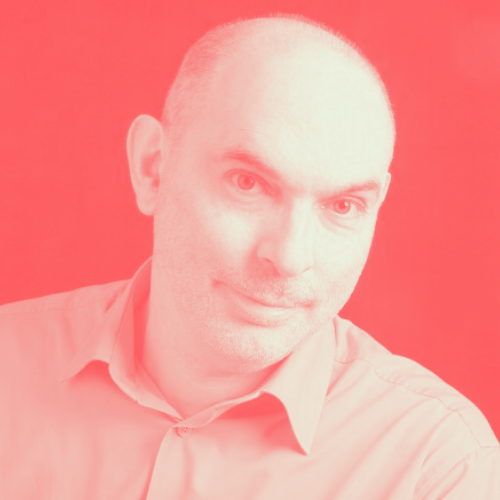
Olivier Ezratty
Author, lecturer and consultant who has specialised in quantum technologies
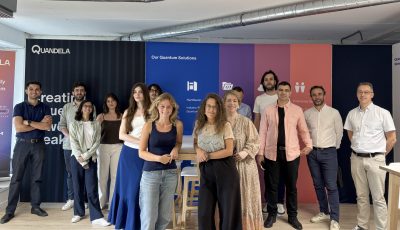
The French start-up Quandela illustrates this dynamic well: it was born from a collaboration with the research team of Pascale Senellart at the Centre for Nanosciences and Nanotechnologies (C2N), which has the largest clean room in France (3,000 m²) for manufacturing very high-quality semiconductors. Quandela is thus developing a technology built on this excellent public research, combined with partnerships with other French and European start-ups. In France, the vast majority of quantum start-up founders are, moreover, former researchers, young and endowed with a genuine entrepreneurial spirit.
France ranks first in the European Union for funding quantum start-ups. This funding combines public money and private equity. Public money comes from the innovation support schemes of Bpifrance, under France 2030: start-ups methodically tap the various funding windows available (iPhD, iLab, iDemo, etc.), before applying for European funding from the European Innovation Council (EIC) or grants from the European Research Council (ERC). The most skilful manage to secure up to 50 million euros in non-dilutive funding, which does not affect their equity.
On the equity side, France has a unique asset in Quantonation, the world’s largest fund specialised in quantum technologies, founded by Olivier Tonneau, Charles Beigbeder and Christophe Jurczak. It manages 300 million euros and holds 38 investments worldwide, alongside investments from large groups such as TotalEnergies, Airbus and BNP Paribas. As start-ups grow, their funding becomes more international. Pasqal, the best-funded French start-up to date (Editor’s note: listed on Nasdaq on 28 August 2026, after this interview took place), thus draws on foreign sovereign wealth funds such as Temasek and Mubadala, while Alice & Bob and Quandela rely mainly on French and European funds.
What are the current technical, physical and energy limits of the quantum computer?
The illusion surrounding quantum computing is very real: everything to do with faster computation, data quality or energy savings remains, for now, a promise rather than a reality. Quantum computers do exist on the market (more than 150 machines have already been delivered worldwide, notably to public research centres), but they require special conditions (an air-conditioned room, for example) and cost several million, or even several tens of millions, of euros.
Oliver Ezratty
Author, lecturer and consultant who has specialised in quantum technologies
There are two types of quantum computers: the analogue computer, which is not programmable, and the programmable computer, which is noisy. This noise is the major current limitation. Unlike a conventional supercomputer, which corrects errors down to a tiny level, the quantum computer today shows an error rate of around 0.1% per operation. Chaining thousands of operations therefore quickly causes the computation to diverge, which limits the circuits that can be used and still prevents any quantum advantage from being guaranteed.
To overcome this limit, industry and academia are aiming for fault-tolerant computers, known as FTQC (Fault-Tolerant Quantum Computing), which rely on error correction. The problem is that this correction requires increasing the number of quantum objects handled by several orders of magnitude, and therefore, in the same proportion, the cryogenics, control electronics and photonics that drive the system.
It is a real technological traffic jam: nearly 90 companies worldwide are competing with different physical approaches, all facing the difficulty of obtaining a large number of stable qubits. Microsoft, for example, persists with a topological approach based on the Majorana qubit, whose chances of success remain very slim. There will probably not be a single winner, but rather a coexistence of three technologies, as in a conventional data centre today: fast qubits for computation (superconducting, silicon), stable qubits for memory (atoms, ions), and photons to interconnect the machines in a network.
This race for scale raises a major energy issue. The world’s twelve largest conventional supercomputers currently consume between 10 and 38 megawatts. Today’s experimental quantum computers consume very little, because they remain small. But the roadmaps of companies such as PsiQuantum and Xenon foresee machines requiring 100 megawatts or more. For a machine of just a hundred or so qubits, a cooling infrastructure comparable to that of CERN or ITER would already be needed. Fortunately, start-ups such as Quandela are developing far more efficient photonic approaches to generate the light required. The hope for European industry is that only the lightest, least energy-hungry and least expensive systems will survive against these energy-intensive machines.
Let’s turn to cybersecurity. Does the quantum computer pose an immediate threat to global encryption, or are we witnessing, here too, a form of self-deception?
We are facing an ambiguous situation. On the one hand, the press and some cybersecurity players have been repeating for ten years that the quantum computer will “break everything” and that there is an urgent need to protect ourselves. This is not entirely wrong, because of a simple principle: retroactive data capture. Intelligence services can already intercept and store data encrypted with today’s public keys (the RSA system, which protects most of the Internet), waiting until they have, in 10 or 15 years, a quantum computer capable of breaking this encryption. If this data is still valuable by then (health records, defence secrets, strategic financial transactions), the threat is real right now. This justifies the immediate deployment of post-quantum cryptography, a colossal undertaking for companies. Bodies such as the NSA and ANSSI estimate that at least five years are needed just to audit networks, inventory industrial equipment and certify deployments. When Google puts forward an emergency deadline of 2029, it is therefore not serious: the capture threat exists and we need to protect ourselves against it immediately, not in three years’ time.
Olivier Ezratty
Author, lecturer and consultant who has specialised in quantum technologies
A recent paper by Australian researchers caused a stir by claiming that the cost of breaking an RSA-2048 key could fall to 100,000 physical qubits, compared with one million according to an earlier Google estimate. But in detail, this estimate assumes a computation time of a full year. Running such a machine without interruption or error for twelve months is unrealistic. To bring this time down to a single day, 471,000 perfect physical qubits would be needed, a technology that does not exist.
Another example: the start-up Oratomic published a paper in which it claims to be able to break the same key with 10,000 neutral-atom qubits, compared with the 58 million estimated until now. But the announced computation time is then 117 years. To bring it down to three months, 26,000 qubits would be needed. Yet, to date, science can only individually control around fifty atoms: scaling up to tens of thousands of perfect atoms remains a considerable technological challenge. The risk of a collapse of global cybersecurity due to quantum computing therefore remains very distant, and may never materialise.
How can Europe build genuine quantum sovereignty in the face of American and Chinese dominance, particularly in the cloud?
This is the major topic of debate today. For ten years, the “quantum bubble” has been feeding on itself. To obtain public funding, physicists told governments that the technology would be mature within 5 or 10 years. Governments, seeking jobs and growth, followed suit, compressing the perceived timescale compared with scientific reality.
Olivier Ezratty
Author, lecturer and consultant who has specialised in quantum technologies
This mechanism nevertheless has a virtuous side. An academic laboratory, limited by law to three PhD students and three postdoctoral researchers per researcher, is not equipped for the multidisciplinary engineering required for a complex industrial product. Only companies, whether start-ups or large groups, have this organisational capacity, provided they are willing to fund it over the long term, with venture capital funds on a ten-year horizon, without expecting an immediate return.
In the quantum cloud, the situation remains complicated. The American hyperscalers, led by Amazon and Microsoft, already control access to the market without owning a functional quantum machine themselves: they integrate other players’ machines, such as the chips of the French company Pasqal on Microsoft’s Azure cloud. The machine remains physically installed at Pasqal, in Massy or Palaiseau, but commercial access and the customer relationship are captured by Microsoft, without the slightest CapEx investment on its part.
In response, Europe is defending itself on two fronts. On the private side, French players such as OVHcloud and Scaleway host software emulators (for example Eviden/Bull’s Qaptiva solution) and provide remote access to Pasqal’s and Quandela’s real machines. On the public side, Europe has a tool unique in the world, the EuroHPC programme, funded by Horizon Europe, which purchases large computers and deploys state-owned quantum infrastructure in seven European countries. In France, the CEA’s Very Large Computing Centre (TGCC), in Bruyères-le-Châtel, already hosts a Pasqal machine and a Quandela machine. In Germany, the Jülich centre has a Pasqal machine and a D-Wave machine. The LRZ in Munich is also equipped, as are centres in Finland and Poland. This is a considerable public strength for European research.
The United States has dominated the digital sector for seventy years thanks to a huge domestic market, a unique ability to attract global talent (40% of its scale-ups were founded by immigrants) and unrivalled financial power. Its funded pension system requires pension funds to invest massively in venture capital, while the European pay-as-you-go system structurally dries up this private capital. The Pentagon’s budget, which accounts for half of global military spending, further accentuates this asymmetry. Finally, Americans have mastered the art of platform strategies and developer ecosystems, a model pioneered by the IBM 360 in 1964, then taken up by Microsoft and Apple. In these network economies, the third player systematically dies, as shown by the failure of Windows Phone against the iOS/Android duopoly: following the Pareto principle, developers concentrate on the top two players.
Olivier Ezratty
Author, lecturer and consultant who has specialised in quantum technologies
On a crucial point of sovereignty, France has also shown vision by securing, through the national quantum plan, its supply chain for rare materials and strategic isotopes. It is now the European leader for liquid helium and isotopically pure silicon, which are essential for manufacturing quantum chips. Europe has the brains, and it has secured the raw materials. It now holds all the cards to impose its own standards, provided it stands united and supports its industrial gems over the long term.
-
Event
The challenges of Post-Quantum Cryptography with Samih Souissi
Wednesday, September 30, 2026, from 7:00 p.m. to 8:30 p.m.
Herbert Smith Freehills Kramer Paris LLP
-
Event
European sovereignty, research and quantum technologies with Adam Lewis
Thursday 18 June 2026, from 9 am to 10 am
Paris