Publication 9 July 2024
Python and literature, with Nathalie Azoulai
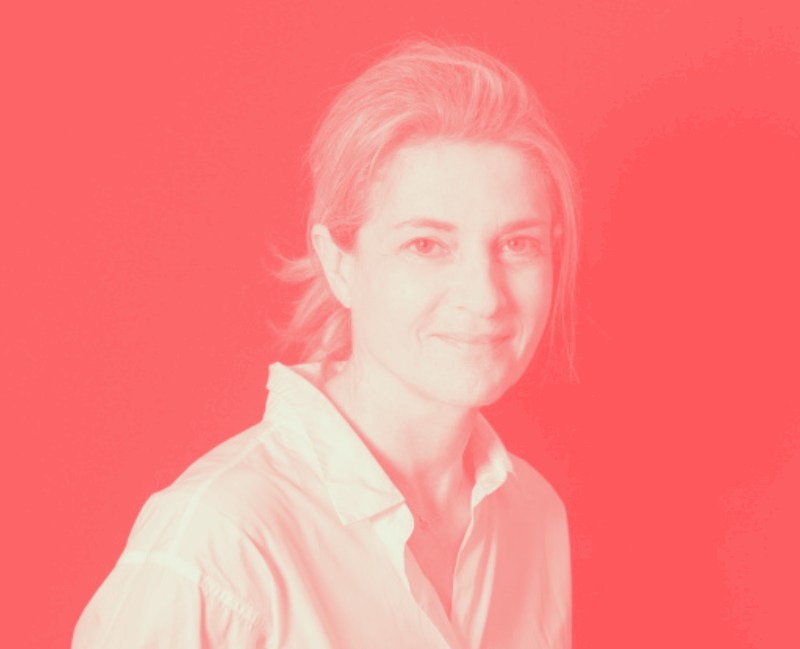
My interest in the worlds of literature and mathematics (already developed in my penultimate novel, La fille parfaite) stems from my background and environment. I enjoy talking to scientists and learning about their approaches. Their capacity for abstraction and emotional detachment nourish me. Not to mention that scientific rigor complements literary nebulosity and that science presents poetic objects that are fascinating to explore, such as infinity or code. In the past, knowledge was not so compartmentalized, and I am an advocate for rebuilding bridges, areas of exchange, and dialogue.
So, to write this book on coding, I chose private tutors and took a few lessons. The logic of coding is very specific, and when you’re not used to it, it’s a challenging mental exercise. I wanted to learn about it to understand the mindset of coders, and it was very stimulating to glimpse their logical trees, their constructions and deconstructions of each action, and the extreme sequencing that code requires. I started out fascinated by Python, then I learned some basic elements that allowed me to understand and rationalize it further. It’s always good to stop being fascinated, even if you need to fantasize to write a novel. The imagination that enriches the characters and the story feeds on both attitudes.
At first glance, the worlds of literature and coding seem to have nothing to do with each other, but I believe that a literary mind is always capable of constructing an imaginary world based on a scientific object. Conversely, it can be useful for coders to understand how a writer thinks. I think it would be useful, even essential, to introduce all children to the logic of code and algorithms, as well as grammar, since the future of the world depends on it, as do many of today’s and tomorrow’s professions.
WATCH THE REPLAY OF ASDN #53
-
News 12 September 2022