Publication 27 October 2026
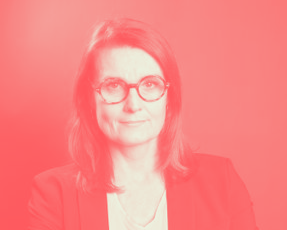
Mental health, social media and adolescents with Pascal Minotte

What do you make of the claim that adolescents today are more anxious and face more mental health problems than previous generations?
Today, we are seeing a deterioration in certain mental health indicators among adolescents, particularly in terms of well-being, depression and anxiety. I also note, in Belgium, that mental health services, in the broad sense, are under heavy demand from adolescents and young adults, to the point of sometimes being saturated.
Nevertheless, whether it is a real deterioration in mental health or simply an observation of the current situation, the indicators and, more broadly, the reality of adolescent mental health remain a cause for concern.
Given this situation, it is worth asking what role social media plays in adolescent mental health. This debate highlights a considerable difficulty in thinking through the sociocultural context in which these uses take place. Of course, depending on each person’s vulnerabilities and sensitivities, social media can fuel a form of anxiety. We also know that algorithms do not seek to present subjects with neutrality and nuance, but instead rely on content that provokes strong emotional reactions.
Pascal Minotte
Psychologist, clinical psychotherapist, researcher and co-director of the Centre de Référence en Santé Mentale (CRéSaM)
What historical perspective can we take on this evolution?
The data available to us today must be interpreted with great caution. Indeed, we do not necessarily have indicators comparable to those of the 1980s, which are often presented as a time when young people’s mental health was supposedly much better.
I therefore believe the question remains open, because the ways of living, expressing and manifesting distress evolve over time, across cultures and eras. It is therefore difficult to claim that young people feel fundamentally worse in their own skin today than in the past.
In this context, what link can be established between social networks and the deterioration of young people’s mental health?
First of all, I think it is important to stress two notions that need to be kept in mind when looking at the link that might be established between social media and adolescent mental health.
The first is effect size. In statistics, it measures the real magnitude of a link between two phenomena, here, between social media use and mental health. This effect size is relatively well documented. If we consider a general population of adolescents, without specifically targeting the most vulnerable, the effect size is small, even very small.
What I want to stress is that the effect sizes reported in studies on social media and mental health are, on average, modest. They are frequently over-interpreted, and their observable consequences in real life are far more limited than the place they occupy in public debate would suggest. By way of example, an analysis of more than 350,000 adolescents (Orben and Przybylski, Nature Human Behaviour, 2019)1 showed that the use of digital technologies explained at most 0.4% of the variations in well-being.
The second notion, which is absolutely fundamental, is correlation. Let us remember that observing a correlation between two phenomena does not, in itself, establish a causal link. In our case, it would be necessary to demonstrate that intensive social media use directly leads to a deterioration in adolescent mental health in order to claim that there is a causal relationship.
To get beyond this difficulty, we can draw in particular on longitudinal studies. The principle is to observe a group of adolescents over time, measuring at different points both how intensively they use social media and the state of their mental health. We can thus try to determine whether greater use of social networks does indeed precede a deterioration in mental health. Yet an English study published by Cheng et al. (2025) does not show the expected phenomenon.2
Pascal Minotte
Psychologist, clinical psychotherapist, researcher and co-director of the Centre de Référence en Santé Mentale (CRéSaM)
Finally, we must also take into account the reality of the clinical field. The adolescents we meet may present very diverse psychological, emotional, relational or school-related difficulties: bullying at school, conflictual parental separation, childhood trauma, and so on. In this context, social media, like video games, can sometimes be used as emotional regulators. For some young people in difficulty, they can offer a form of escape, a way of distracting themselves or of seeking out more positive emotional experiences.
This obviously does not mean that social media is always beneficial, or that it can never contribute to psychological difficulties. But it invites us to consider its use in a broader context and to avoid reducing the complexity of adolescent mental health to a single cause.
In your view, to what extent is the sociocultural context decisive for understanding adolescents’ use of social media?
The profound sociocultural transformations of our societies make our children more responsible and reasonable than the generations that preceded them. We live in a society that has valued this aspect, which explains “bedroom culture”. Bedroom culture refers to the way in which, in adolescence, the bedroom becomes a space of one’s own. Adolescents do not necessarily want to spend the whole evening with their parents, because they need a place to build their autonomy and stay in touch with their friends, notably through screens. At this age, curiosity and sociability are central to a young person’s life, making their bedroom a privileged place for exploration and social interaction. When young people are doing well in terms of mental health, they develop, among other things, a form of social curiosity that is not limited to relationships with others. It also involves seeking to understand how the world works, opening up to the world and to others, making new discoveries and exploring.
Pascal Minotte
Psychologist, clinical psychotherapist, researcher and co-director of the Centre de Référence en Santé Mentale (CRéSaM)
We therefore need to ask ourselves collectively: where are the informal spaces for socialisation dedicated to adolescents, if not in the digital world? What can society, the family and school offer them?
I am being a little provocative in saying this, but we live in a society that remains largely structured around the interests and concerns of previous generations, preventing the youngest from fully flourishing in it. Perhaps by doing things differently, we could better meet these needs. We can of course point the finger at social media, which probably bears some responsibility in this equation, but which is only the tip of the iceberg. We must also keep in mind that these are technical systems that operate within a very specific sociocultural context.
In a context where the use of AI agents and companions is growing among adolescents, what concerns and hopes does this raise?
Indeed, AI companions and chatbots are now at the heart of concerns. However, we must remain cautious, as we still have very little scientific and statistical perspective on their effects.
As a mental health professional, and above all given the position my service holds in Belgium, we are quite concerned about how the offer of support and care may evolve in the coming years for adolescents and young adults. In a context of spending cuts and an overall lack of resources, we must admit, even if the idea still seems barely acceptable today, particularly in Belgium, that the round-the-clock availability of chatbots and AI agents is emerging in a context where mental health professionals are becoming less and less accessible, notably because services are saturated.
There is therefore this contrast between, on the one hand, the congestion of our services and, on the other, the hyper-availability of AI, which worries me somewhat. I am not reassured about how the appropriation of AI will make it possible to realise the potential offered by this type of technology, because people and their needs are rarely at the heart of how technological novelties are implemented.
I also share concerns about the professional changes that therapists may or will undergo in the age of AI. Delegating routine tasks to AI, such as writing up reports, raises issues of privacy and compliance with the General Data Protection Regulation (GDPR). I also wonder how the freed-up time will actually be reallocated. Routine tasks are not necessarily the most fulfilling, but they sometimes provide a form of breathing space in a profession marked by strong relational intensity.
What is your view of the tendency to describe certain digital uses as “addiction”?
The use of the word “addiction” to describe a concern or a “problem”, as has been the case with video games or social media, serves above all a strategic purpose, by emphasising its alarmist character. I observe that this discourse, which insists on the notion of addiction, has perverse effects in clinical practice. This terminology is even counter-productive, which is not at all the intention, a priori, of most of the people who use it.
Pascal Minotte
Psychologist, clinical psychotherapist, researcher and co-director of the Centre de Référence en Santé Mentale (CRéSaM)
Moreover, the repeated use of vocabulary relating to “pathologisation” or “addiction” in public debate about adolescents’ digital uses can help to disqualify parents’ skills by shifting the question to the level of expertise. Yet one does not need to be a technology expert to support one’s child. Parents can draw on their own skills and values, notably listening, as well as their relational and emotional skills.
For example, when a child plays a lot of video games, we sometimes hear that they are “addicted” simply because they spend a lot of time on them. Yet this reasoning reduces the situation to a simple question of time spent playing, at the risk of stigmatising video games and missing the reasons underlying this use. As psychologists, we know that suffering is generally hidden behind excessive, even potentially problematic use. It is therefore more relevant to try to understand what the child and their family are going through rather than trying at all costs to force them into a diagnostic category.
By pathologizing certain behaviours, we risk undermining parental expertise by turning an educational or relational issue into a medical or psychological problem.
-
Event

Addiction and social media with Thomas Gaon
Friday 17 April 2026, from 2 p.m to 3.30 p.m
Paris