Publication 10 November 2026
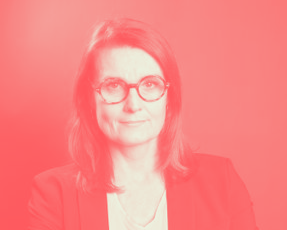
Addiction and Social Media : A Clinical Perspective with Thomas Gaon

In the context of the recent lawsuits against certain social media platforms in the United States, the question of addiction to these platforms has taken on renewed prominence in public debate. What is your view on the appropriateness of using the term “addiction” in relation to social media?
In my clinical practice, I see patients who are addicted to pornography or online gambling. These situations are, however, very different from those involving people who spend a great deal of time on social media. The intensity of the behaviours and the degree of emotional dysregulation (the difficulty of managing or controlling one’s emotional responses to certain situations) differ considerably.
What they do have in common, however, is habituation and the transition from impulsive to compulsive behaviour. An impulse is about immediate gratification: “I feel like doing it, so I do it”. Compulsion is having to perform the action in order to calm down and reduce a tension. A behaviour you are accustomed to compulsive actions. For example, automatically reaching for one’s phone as soon as one feels slightly tense while sitting and waiting.
The problem arises when this compulsion becomes a behavior that conflicts with one’s own wishes, that one would like to stop, and that one knows is harmful. From this perspective, using the term addiction in relation to social media is too strong. At present, nobody comes to see me saying, “I can’t stop using Facebook or TikTok”. This does not mean, however, that excessive or problematic use does not exist. Rather, according to my clinical observations, such behaviors do not amount to genuine addiction or involve withdrawal symptoms.
Among minors, digital practices are often accompanied by constant monitoring of relationships and self-image, fuelled by FOMO (Fear of Missing Out) and the desire to manage one’s online reputation. While some young people spend considerable amounts of time scrolling through content, sometimes in an almost hypnotic manner, this does not, for all that, amount to addiction in the clinical sense of the term.
The literature uses many different terms to describe young people’s relationship with social media: excessive use, problematic use, pathological use, addiction, dependence, and so on. They all attempt to categorise a complex reality. What was once considered abnormal may have become a social norm today. In clinical practice, however, the essential criterion remains the suffering experienced by the individual: whenever a behaviour, even a relatively moderate one, becomes a source of difficulty or distress, it is this situation that needs to be addressed.
What, then, are the criteria for addiction?
The main criteria for addiction are based on subjective suffering and objective harm. Some vulnerable individuals find in a particular use a means of regulation, which gives them soothing or pleasure. When this behavior becomes exclusive and all-consuming, to the point of taking control of the individual, it may then be described as an addiction. It is above all a pathology of the bond : the individual relies more on an object than on human relationships to cope with their difficulties.
Thomas Gaon
Clinical psychologist holding degrees in Clinical Psychopathology and Ethnomethodology
Addiction, however, is a deeper phenomenon: it constitutes a regulation strategy in response to a significant underlying difficulty, but one that comes at a high cost, both in terms of suffering and harm to the individual.
From a clinical perspective, this is not a matter of addiction to social media. Indeed, if addiction were defined solely in terms of time spent, social isolation or the repetition of a habit, many everyday activities, such as DIY or fishing, could be classified as addictive. This approach risks pathologising any excessive behavior, overlooking the fact that screens may primarily amplify pre-existing psychological distress. Thus, some young people’s excessive investment in the digital world may both reveal and reinforce their psychological difficulties.
Does the problem lie with the product itself, the content, or the designers?
The medium (the screen, the phone) and the content contaminate one another. Through repeatedly using their phone for a particular purpose, the brain gradually associates the device itself with that behavior, potentially triggering a compulsive reflex. While screens capture attention through their brightness and interactivity, the nature of the content being accessed (social media, pornography, online gambling) also plays an essential role.
The limitations of some current studies stem from the fact that they apply criteria drawn from already recognised addictions, such as withdrawal symptoms or increased tolerance, to social media without always taking the specific characteristics of these uses into account. Similarly, measuring screen time without distinguishing between the activities involved or the context in which they take place is of limited relevance: a screen may, for example, remain on for several hours simply to play music. Such an approach therefore raises significant questions about the methodological rigour of this research.
It would therefore be reductive to hold the device itself solely responsible. The real challenge is to establish a healthy balance between offline and connected life, without falling into a simplistic opposition between puritanical “digital detox” approaches and uncritical acceptance of technology.
Thomas Gaon
Clinical psychologist holding degrees in Clinical Psychopathology and Ethnomethodology
Unfortunately, we cannot prevent a profit-driven industry from finding designers and engineers willing to create harmful interfaces as long as they remain profitable. Ethics have their limits when confronted with the pursuit of profit, hence the need for regulation. I therefore believe that platforms must be held liable, because prevention, though necessary, is ineffective and parents are overwhelmed. Prevention, while necessary, is not sufficient, and parents are often overwhelmed. Tech companies should be required to prohibit or limit by default design features intended to capture users’ attention in harmful ways.
Beyond the criticism surrounding the bill to ban social media for under-15s, including the arguments we put forward in our opinion piece, could such a measure nevertheless indirectly encourage young people to reconnect with more direct and tangible forms of socialisation ?
Absolutely. We can see this, for example, at summer camps when teenagers are deprived of their phones. At first, they panic. But they adapt very quickly, rebuild face-to-face relationships and are very happy as a result.
Today, the phone acts as a constant intermediary in virtually all interactions. In her book it’s Complicated: The social lives of networks teens (C&F éditions, 2016), danah boyd, a researcher at Microsoft, describes the hybridisation of social relationships in the digital age. Young people can meet physically in the village square while continuing to communicate and maintain their relationships through their phones, thereby combining physical presence with digital interaction.
Thomas Gaon
Clinical psychologist holding degrees in Clinical Psychopathology and Ethnomethodology
They are made more vulnerable because they lose their ability to contain and process their emotions. Whereas in the past, when faced with a problem, they had to cope with their difficulties and distress, even relatively minor ones, by drawing on their own resources, today they can react immediately and seek relief through consuming content or sharing their experiences online.
The body, meanwhile, becomes accustomed to this stimulation, to the point of becoming bored without a screen and demanding constant hyperstimulation, whether through watching videos at accelerated speed or using several screens simultaneously. As I mentioned earlier, although this does not necessarily constitute addiction in the strict sense, mechanisms of tolerance and habituation raise genuine concerns.
This is first and foremost a public health issue and a matter of digital hygiene. It took years for handwashing to become firmly established as a collective habit. In the same way, we need to learn how to live with digital technology. Unlike the landline telephone, the smartphone is an individual and discreet device that largely escapes collective rules. Everyone develops their own set of rules, although some practices may be shared and gradually become informal conventions within certain social groups, such as not using phones in the bedroom. We therefore need to work collectively towards establishing a healthier relationship with social media and digital technology more broadly, by raising awareness from an early age.
However, in light of what I have said previously, introducing a one-size-fits-all law could prove problematic.
Thomas Gaon
Clinical psychologist holding degrees in Clinical Psychopathology and Ethnomethodology
-

Publication 27 October 2026
Mental health, social media and adolescents with Pascal Minotte