
News 11 February 2026
Renaissance Numérique supports the launch of CharabIA
Can you tell us about CharabIA?
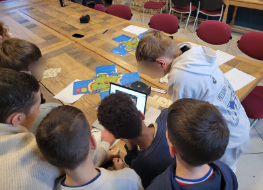
CharabIA is first and foremost a game board that transforms the classroom into an adventure playground. Students manipulate cards, open chests, solve puzzles, and use artificial intelligence (AI) tools to progress through the story.
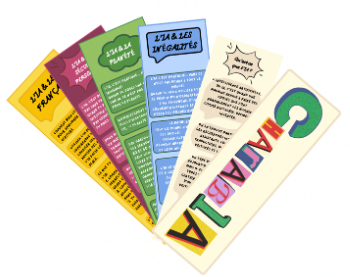 But a CharabIA session is not just about playing games: each student also leaves with a booklet so they can continue learning about artificial intelligence at home, share their new knowledge with their friends and family, and continue testing tools on their own. Finally, to reward their commitment, we award them a “young AI explorer” diploma, which symbolizes the skills they have acquired and boosts their self-confidence.
Today, we also offer CharabIA workshops to government agencies and companies that want their employees to use and understand how AI can support their daily tasks, while remaining fully aware of the risks associated with its use.
How do you raise awareness among young people about the challenges of AI?
At CharabIA, we are convinced of one thing: students learn better by experimenting than by listening. It is therefore essential to combine theory and practice.
We have designed a program where, for two hours, each student becomes an investigator, immersed in an educational escape game. Generative artificial intelligence becomes a tool that can be manipulated, tested, and questioned. Each adventure immerses participants in a different universe, ranging from space exploration with SpatIA to survival with KohLantIA, but the goal remains the same: to develop critical thinking, a taste for learning, reinforce fundamental knowledge, and the ability to cooperate.
How did you come up with the idea for this project?
We wanted to examine the future of education in the face of the upheavals brought about by artificial intelligence. Thanks to Sciences Po’s Public Policy Incubator and Renaissance Numérique, we worked on the following issue: “How can we effectively train and inform young people to ensure that the deployment of artificial intelligence technologies does not reinforce existing inequalities within society?”
Very quickly, our attention turned to middle school students, and more specifically to those entering 6th grade, a pivotal moment when academic gaps widen and self-confidence is often undermined.
How do you envisage its adoption by middle schools and various educational organizations?
To ensure that CharabIA can be used in middle schools, we designed it to be practical and flexible. A pair of instructors and two portable game kits—containing all the materials needed to run the activity—are all that is needed to run a workshop in any multimedia room or library. This simplicity means it can be easily integrated into existing slots such as Media and Information Literacy (EMI) lessons or homework support sessions.
 To facilitate implementation, we provide school principals with a turnkey package, ensuring rapid approval and integration without disrupting the educational program.
With artificial intelligence evolving so rapidly, isn’t there a risk that the game will lose its relevance in a few months?
Every summer, the content will be enriched and updated, with the creation of new thematic modules to keep pace with changing issues. Currently, we run the workshops ourselves, but eventually we would like our workshops to be run by specialized associations. Each facilitator will undergo three hours of initial training, combining theory and practice, and will then begin by co-facilitating with an experienced partner in order to gain experience in real-life situations.
What economic model is your association based on?
To ensure that CharabIA can be rolled out widely and sustainably, we have developed a hybrid funding model. It relies on support from local authorities, private partnerships with stakeholders involved in AI education, and national calls for projects. This diversity of support enables us to secure the program and prioritize its rollout in middle schools that need it most.