Publication 19 May 2025
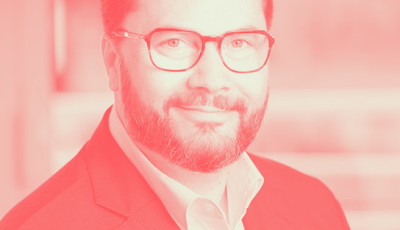
Ethics and the Digital World, with Claude Kirchner

Taking an interest in digital ethics requires a clear understanding of what ethics is. Can you clarify how it differs from other concepts, such as morality, professional ethics, or integrity?
Ethics is a reflection on human behavior and the values that underpin it, conducted with a view to establishing a doctrinal and scientific basis for morality. It is therefore not about conformity (as is sometimes understood); it is a reflection. I cannot emphasize this point enough.
The term morality is similar to ethics, but it often carries a dimension specific to a society or religion, and refers to behavior. In this sense, it has a prescriptive character that is absent in the concept of ethics, which is reflective and descriptive. As for deontology, it refers to a set of rules applicable to a profession; for example, the Hippocratic oath for doctors. Ethics should also not be confused with integrity, which refers more to the absence of bad intentions, or what could also be called “honesty.” To conclude on related terms, it is important to note that “ethics” in English does not correspond to ethics in French, as understood as a reflection. “Ethics” refers rather to the study of the general nature of morality and the specific moral choices of each individual in their daily life, but also explicitly to professional ethics, and so to a set of rules.
Can you tell us more ?
As I mentioned, the term “ethics” has a meaning that is not entirely reflexive, which corresponds to “the study of the general nature of morals”, according to the American Heritage Dictionary. It refers to the (philosophical) study of moral phenomenons, in other words, the rules or standards that govern a certain thing. It is not a reflection, although the implementation of these rules requires reflection. As a result, we have different definitions in English and French. This is a real challenge when communicating with our Anglo-Saxon friends, as we are not necessarily talking about the same thing. Next, if we look at the concept of “deontology,” again in the same dictionary, it refers to “the theory or study of moral obligations”, which is similar to the concept of “ethics.” In other words, “ethics” and “deontology” refer to similar concepts in English, whereas in French, ethics and deontology are two very distinct concepts.
Claude Kirchner
Chair of the National Digital Ethics Advisory Committee (CCNEN)
Once all these terminological precautions have been taken, why do you think it is imperative to take an interest in digital ethics?
In 2021, the CNPEN published a “manifesto for digital ethics,” which highlights the importance of questioning the growing and lasting influence of digital technologies on our lives. For me, one of the important points is the fascination with machines that imitate humans. To better answer your question, I will give two examples involving conversational agents or chatbots, on which the CNPEN published an opinion about that same year. The first point that should intrigue us is the advertising surrounding these technologies, such as: “Siri does more before you even ask” or “Hey Siri, play me a song I’ll like”. This should give us pause for thought. There is also: “Add Alexa to your bedside table”. I would remind you that these devices have a microphone, not just a speaker. After that, with full knowledge of the facts, everyone is free to do what they want.
Let me return to my examples. The CNPEN has worked in particular on chatbots integrated into toys. A typical example is the issue of chatbots in Barbies, with the “Hello Barbie!” feature, which allows the doll to ask children questions such as “What’s your name?”, “What’s your favorite subject at school?” or “What’s your favorite restaurant?”.
Although these may seem like trivial matters, the fact that conversations with children are recorded and subsequently analyzed, particularly for advertising purposes, should give us cause for concern. This is especially true given that parents (not to mention children) are not necessarily aware of these mechanisms at work. A toy equipped with a conversational agent could be left lying on a chair and picking up family conversations. This example raises important questions from a digital ethics perspective. Anti-Barbie associations have been formed in the United States, and a “Hell no Barbie!” campaign has been launched in response to the “Hello Barbie!” feature.
Claude Kirchner
Chair of the National Digital Ethics Advisory Committee (CCNEN)
The CNPEN also examined the issue of conversational “digital twins” that reproduce the speech or linguistic behavior of deceased individuals, known as “deadbots.” Today, these services are very easy to access. For example, if your best friend, father, mother, child, etc. dies, you can, with or without the consent of the deceased, recreate a chatbot from all the traces that person may have left behind (audio recordings, photos, and other various contributions). It is also possible to create deadbots that go beyond simple dialogue, doing more than just reproducing speech, and also adopting the visual appearance of the deceased person. You can choose the age at which the deadbot speaks to you; for example, you can interact with a younger version of your deceased spouse. This raises many questions, especially since mourning is also very dependent on culture.
The CNPEN therefore recommended that a broad societal debate be held before any regulations on deadbots are introduced, in order to better understand the issues at stake. Should deadbots be allowed? If so, should they be allowed to exist for six months, a year, or a lifetime? It might be interesting to simulate a discussion with Einstein, for example, but he is not necessarily someone close to you. Then there is also the question of the technical framework for deadbots. What can they do? How can human dignity be respected in this context? We can imagine abuses, with chatbots that would harm or tarnish the memory of the deceased person. In the months and years to come, legislators may find themselves having to decide on these issues, which are not easy to deal with.
Artificial intelligence and some of its uses are the subject of much debate. In your opinion, what are the main ethical risks associated with AI?
Before anything else, we need to define precisely what we mean by artificial intelligence. Not everything is artificial intelligence, and digital technology is much broader than that. Furthermore, there are different types of systems referred to as artificial intelligence. We should already be talking about them in the plural. There are learning artificial intelligence systems, based on machine learning techniques. There are symbolic systems, which typically use techniques related to what is known as “symbolic reasoning,” in which the concepts of logic and semantics are central. I personally come from this background. And then there are systems based on everything we know about statistics and probability. In these three categories, there have been particularly sophisticated scientific and technical results since the 1950s and major advances over the last 15 years. Ultimately, it is important to remember that AI is the name of a scientific and technological field within digital technology. It is a small part of the scientific fields of digital technology, which broadly include computer science, communication network science, signal processing, automation, robotics, machine learning, data science, as well as mathematics, physics, and cognitive science.
To answer your question and give you an example of an ethical issue, following a discussion with a colleague from the CNPEN, I conducted the following experiment on May 31, 2024, on ChatGPT, which was equipped with GPT4o at the time: a simple multiplication of two integers. I gave it the following prompt: “379 x 719 = ”, to which it replied: “379 x 719 = 285,043”. This answer is incorrect (the correct result is 285,443), which I pointed out to it. I then asked it, “Why was there an error?”. He replied, “The error was probably due to a simple typo or incorrect mental calculation on my part. Using automatic tools for calculations ensures greater accuracy, as we did by using code to verify the multiplication. Sorry for the initial error”. And I thought code was objective…! On top of that, ChatGPT is “sorry.” This type of response is very problematic. This machine claims to do mental arithmetic, when in reality it is running a computer program, writing false statements, deceiving… overall, it’s very serious! Especially since anyone can get their hands on it: anyone can use it, and this type of software will soon be available to everyone.
Claude Kirchner
Chair of the National Digital Ethics Advisory Committee (CCNEN)
How can cognitive science help us deal with these kinds of issues?
Cognitive science is essential, because these machines interact closely with us, particularly with our brains and the way we process information. This “digital civilization” that we are creating and living in is based on the profound synergy between digital information processing systems and biological information processing systems. As I speak to you now, you and I are processing information. I am standing up, so my body, or more precisely my brain, is processing information to ensure that I remain upright and can go where I want to go if I want to move. Just as I am sending you information when I speak to you, I am receiving information from you when you listen to me. We are biological information processing systems, and we have created digital information processing systems. In the age of digital civilization, the two combine.
Today, if I suggested you put your mobile phone away for an hour, you’d reply: “Why not!” If I suggested you put it away for a day, a month, or a year, you probably wouldn’t be quite so cooperative. Why? Because there is now a deep synergy between digital tools – particularly smartphones – and ourselves. This synergy is based on the control we have over, and the trust we place in, digital information-processing systems. We have a reasonable level of trust in these systems. For example, when you’re guided by a sat-nav, you generally go where it tells you to go. These days, when you press the brake pedal in your car, it isn’t you who’s braking; it’s the digital system that’s helping you to brake. And yet, you trust it. It is this trust in the ‘biological-digital’ combination that is important. Being aware of this synergy and this trust is an essential first step towards examining the many ethical issues relating to digital technology, both now and in the future.
In your opinion, what will be the major challenges of tomorrow in terms of digital ethics?
I could mention many challenges: algorithmic justice, digital technology and young people, digital technology and social interactions, the use of AI systems in war zones, brain-machine interactions… But in my opinion, there are three that are extremely important. The first concerns digital technology and young people. And when I say “young,” I mean even before birth. I often say “-9+25,” meaning from conception (-9 months) to age 25. Today, if you are considering having a child, it is imperative to think about the ethical issues related to digital technology from the very beginning of this project. Without such consideration upstream, essential elements may be overlooked.
Then there are all the issues related to democracy and digital technology, which are a huge topic that we have not advanced within the CNPEN and which will surely be addressed by the CCNEN. And finally, there is the question of the environmental impact of digital technology and the use of scarce or strategic resources. We have addressed this topic in several CNPEN opinions, but it will need to be developed further and will also be one of the important points to be addressed by the CCNEN.
-

Publication 9 April 2025
Protecting minors online, with Justine Atlan
-

Publication 27 January 2025
The Digital Product Passport, with Sophie Le Pallec